
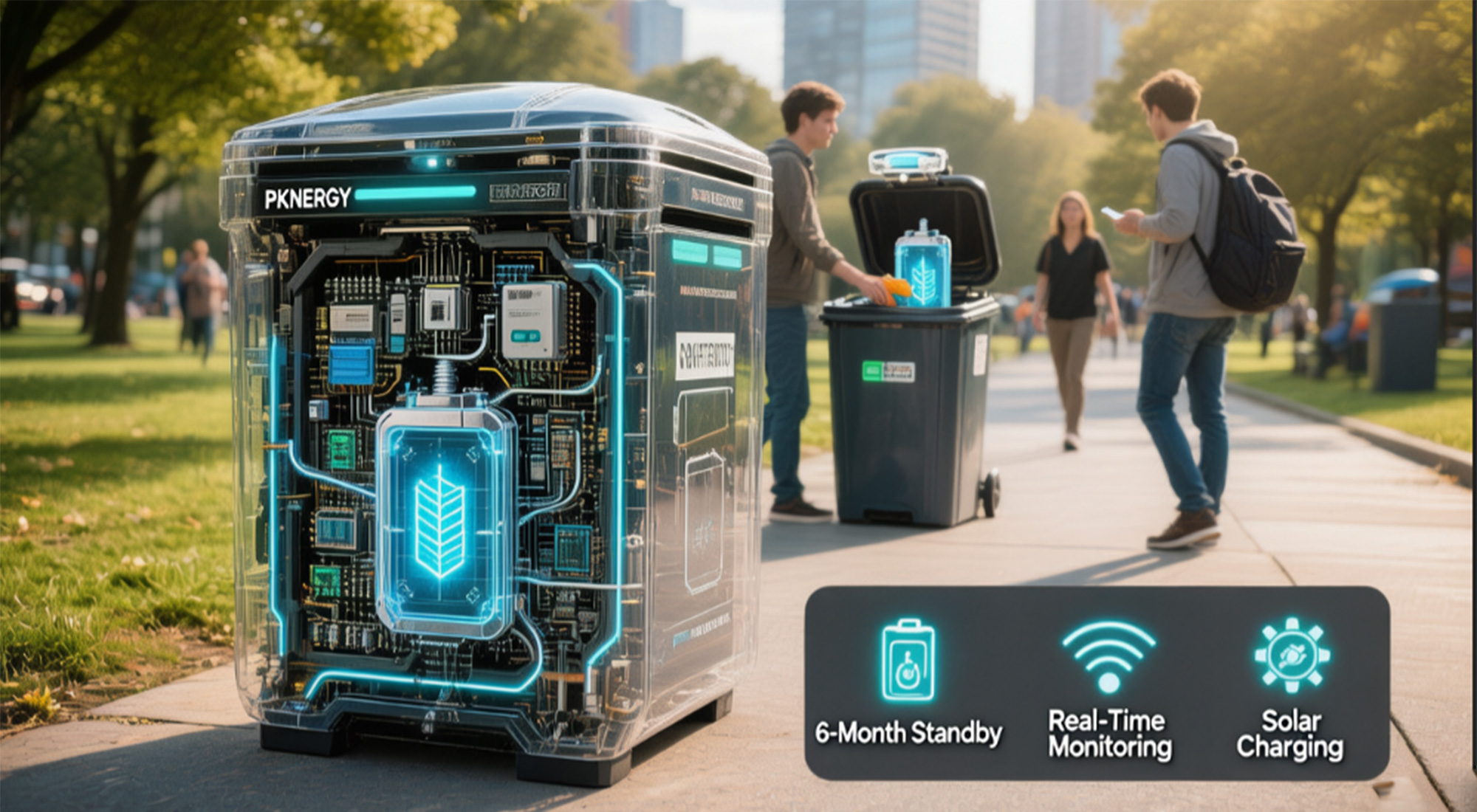
Why Smart Waste Bin IoT Modules Prefer 18650 Lithium Batteries
How durable, temperature-resistant 18650 lithium batteries power next-generation smart waste bin IoT modules for reliable, low-maintenance city operations.
Smart Waste Bin IoT: Why Power Matters
Smart Waste Bin IoT Modules are transforming how cities manage municipal waste. By integrating fill-level sensing, route
optimization, temperature and fire detection, and remote diagnostics, these modules help reduce operating costs, improve
hygiene, and support sustainable urban management. :contentReference[oaicite:0]{index=0}
All of these smart features depend on one critical foundation: a durable, temperature-resistant, long-life
battery system. For this reason, 18650 lithium-ion batteries have become the most widely adopted power solution
for smart waste bin IoT modules.
As more cities deploy thousands of connected waste bins, choosing the right battery directly impacts:
- Maintenance intervals and field labor cost
- System uptime and communication reliability
- Performance under outdoor temperature extremes
- Return on investment over multi-year project cycles
What Smart Waste Bin IoT Modules Need from Batteries
A typical smart waste bin IoT controller integrates: :contentReference[oaicite:1]{index=1}
- Ultrasonic or infrared fill-level sensors
- Temperature or fire sensors
- LoRa, NB-IoT, or 4G wireless connectivity
- Event-triggered wake-up logic for low power consumption
- GPS or BLE positioning in some models
- Motors in compacting bins
To support these functions reliably, the battery system must provide:
- Ultra-low standby current for long sleep periods
- High pulse current (often 1 A or more) for wireless transmission bursts
- Outdoor resilience, typically from −10°C to 60°C inside metal or plastic bins
- Multi-year field life, usually 3–7 years, to match project deployment cycles
For cities and solution providers, this makes battery selection a strategic engineering decision rather than a simple
component choice.
Why 18650 Lithium Batteries Are Ideal for Smart Waste Bins
18650 lithium-ion cells are widely used in industrial, e-mobility, and IoT applications. For smart waste bin modules,
they offer a unique balance of pulse performance, thermal stability, and long-term durability. :contentReference[oaicite:2]{index=2}
- Outstanding pulse-discharge performance18650 cells provide strong instantaneous current to support NB-IoT or 4G uplinks without serious voltage sag that could
cause transmission failure or system reset. - Excellent thermal toleranceProperly selected 18650 cells can tolerate elevated temperatures inside metal bins during summer and remain functional
in cold winter conditions. - High energy densityMore energy per volume extends maintenance intervals, so crews can visit bins less frequently while still maintaining
reliable operation. - Strong mechanical durabilityCylindrical cells resist vibration, impact, and moisture better than many LiPo formats, which is important in outdoor
installations. - Long operational lifespanProperly designed 18650 packs can meet the long-cycle requirements of municipal and industrial projects, reducing
total cost of ownership.
18650 vs. Other Common Battery Options in Smart Waste Bin IoT
| Battery Type | Energy Density | Pulse Performance | Mechanical Strength | Outdoor Suitability |
|---|---|---|---|---|
| 18650 Li-ion | High | Excellent | Strong | Very suitable |
| LiPo Pouch | High | Good | Medium | Needs careful mechanical protection |
| Primary Lithium (non-rechargeable) | Medium–High | Good | Good | Used in some designs but not rechargeable |
For compact smart city devices using different form factors, PKNERGY also provides
custom lithium polymer battery packs
and
LiFePO₄ battery customization
when ultra-long cycle life or special size is required.
Typical Battery Configurations for Smart Waste Bins
Depending on sensor load, communication frequency, and whether compaction motors are used, smart waste bin IoT modules
often adopt one of the following pack configurations: :contentReference[oaicite:3]{index=3}
- 1S1P (3.7 V)For basic sensing modules with low-power communication and infrequent reporting.
- 1S2P (3.7 V, high-capacity)For long-interval reporting or when more energy is needed to extend service intervals.
- 2S1P (7.4 V)For advanced multi-sensor systems that need higher voltage for certain electronics.
- 2S/3S + BMSFor smart compacting bins where motors require higher power and more sophisticated protection.
PKNERGY supports full customization for all of these configurations, including cell brand selection, pack structure,
harness design, and battery management system (BMS) parameters.
PKNERGY Advantages for Smart Waste Battery Packs
Beyond cell selection, PKNERGY focuses on optimizing pulse performance, thermal behavior, and long-term reliability of
18650 packs used in harsh outdoor environments. :contentReference[oaicite:4]{index=4}
- Pulse discharge tuningPack design and BMS parameters are tuned to handle high peak currents during NB-IoT, LoRa, or 4G transmissions, ensuring
that wireless reporting remains stable. - High-temperature enduranceChemistry and pack structure are selected to operate reliably from −10°C to 60°C, addressing the real thermal conditions
inside outdoor bins. - Fully customized pack designPacks are tailored to the internal cavity of each customer’s control module, including dimensions, mounting features,
wiring, and connector choice. - Professional reliability validationThermal aging, vibration, pulse-current, humidity, and salt-spray testing help verify long-term performance for
municipal deployments.
For integrators building broader smart-city platforms, these battery technologies can be combined with
solar lighting power solutions
and other outdoor IoT power systems to create unified maintenance and deployment strategies.
FAQ: Batteries for Smart Waste Bin IoT Systems
1. How long can a smart waste bin IoT module run on an 18650 battery pack?
Runtime depends on reporting frequency, communication technology, and sensor load. Many projects target multi-year
operation. PKNERGY can simulate and calculate expected life based on your specific data-uplink strategy and environment.
2. Why choose 18650 cells instead of LiPo for smart waste bins?
18650 cells offer excellent pulse performance, strong mechanical durability, and good thermal behavior in outdoor
environments. LiPo can be used in some compact designs, but usually requires more mechanical protection.
3. Can PKNERGY design packs for compacting smart bins with motors?
Yes. For compacting bins, we typically design 2S or 3S packs with appropriate BMS protection and pulse-current tuning
to support motor startup without compromising pack life.
4. What tests are needed before deploying battery packs in city projects?
We recommend thermal cycling, vibration, pulse-current, humidity, and salt-spray tests to ensure the pack can handle
real-world conditions over years of operation.
5. How can we start a smart waste bin battery project with PKNERGY?
You can share your module’s voltage and current profile, communication strategy, mechanical constraints, and target
service life. PKNERGY will then propose a suitable 18650 pack configuration and validation plan.
Contact Miah — PKNERGY
If you are developing smart waste bin IoT modules or other outdoor IoT devices, PKNERGY can provide 18650 battery packs
optimized for pulse performance, thermal stability, and long-term reliability in municipal projects.
- Name: Miah (崔娟)
- Company: PKNERGY
- Email: sale@pknergy.com
- WhatsApp: +86 139 0246 3897
- Website: https://pknergy.com
You can also follow PKNERGY on:
YouTube,
LinkedIn,
X,
Facebook,
TikTok.
Or submit your project details via our
Contact Us page and our team will reply soon.
Post time: Dec-09-2025