
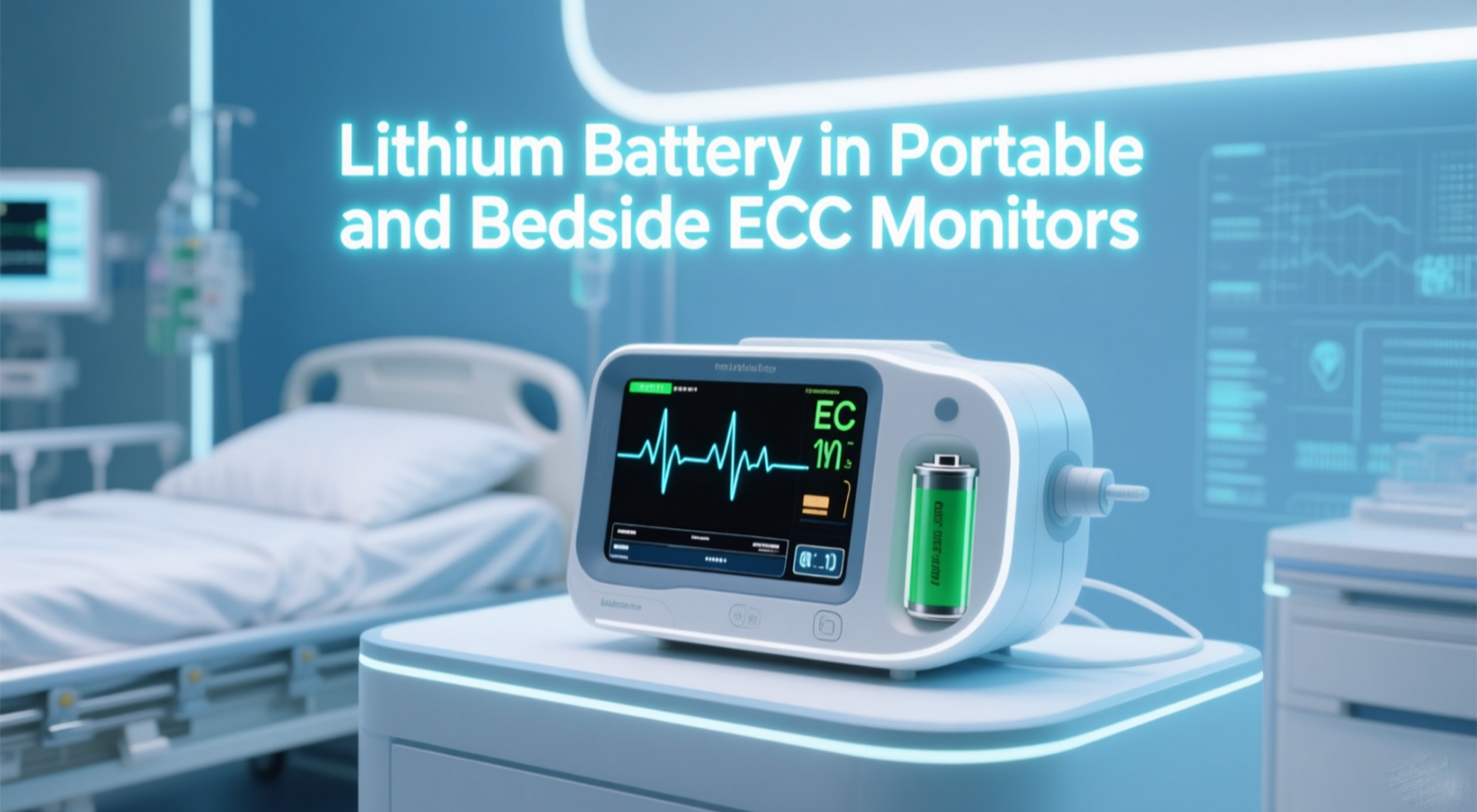
Lithium Battery in Portable and Bedside ECG Monitors
Powering Reliable Healthcare Solutions for Modern Cardiac Monitoring
Medical Device Battery
Lithium batteries play a crucial role in enabling efficient and dependable device operation, especially in scenarios where portability, reliability, and backup power are all required simultaneously.
Why Lithium Batteries Are Ideal for ECG Monitors
Lithium-ion (Li-ion) and Lithium Polymer (LiPo) batteries offer several advantages over traditional power sources in medical devices. These advantages are not only theoretical but have been validated through years of deployment in clinical monitoring systems.
- High Energy Density: Lithium batteries provide compact yet powerful energy storage, allowing portable ECG monitors to remain lightweight while still supporting long operating times.
- Long Cycle Life: Compared with traditional chemistries, lithium batteries can withstand more charge-discharge cycles, reducing maintenance frequency and total cost of ownership.
- Stable Voltage Output: A stable voltage platform ensures accurate ECG signal acquisition and reduces noise or data distortion during long monitoring sessions.
- Fast Charging Capability: With USB-C fast charging and advanced battery management systems (BMS), devices can quickly return to operation, minimizing downtime in clinical workflows.
- Low Self-Discharge Rate: Lithium batteries retain charge over extended periods, making them highly suitable for emergency backup scenarios and standby medical equipment.
These characteristics make lithium batteries the preferred choice for both portable and bedside ECG monitoring systems.
Key Applications in Portable and Bedside ECG Devices
Bedside ECG monitors rely on lithium battery systems to maintain continuous monitoring in hospitals, ICUs, and cardiac care units. Even when connected to external power, internal batteries act as a critical backup.
- Ensuring uninterrupted monitoring during power outages
- Supporting patient transfer between departments without signal loss
- Enabling integration with multi-parameter monitoring systems
Portable ECG monitors, including handheld and wearable devices, place even higher demands on battery performance.
- Compact and lightweight design for patient mobility
- High energy efficiency for long-term monitoring
- Reliable wireless communication powered by stable energy output
Recommended Battery Parameters for ECG Monitors
Battery selection for portable and bedside ECG monitors must balance operating time, device size, safety, and reliability. The following table summarizes commonly used engineering reference parameters.
| Parameter | Typical Range | Engineering Consideration |
|---|---|---|
| Battery Type | Li-ion / LiPo | Rechargeable batteries preferred for reusable medical devices |
| Nominal Voltage | 3.6V–3.7V | Compatible with most ECG electronics and BMS designs |
| Capacity | 1000mAh–5000mAh | Depends on device size and backup runtime requirements |
| Operating Time | 4–24 hours (portable) / Backup mode (bedside) | Must support continuous monitoring and emergency backup |
| Cycle Life | 500–1000 cycles | Important for long-term hospital use |
| Charge Time | 1–4 hours | Fast charging improves device availability |
| Protection | BMS integrated | Overcharge, over-discharge, short circuit protection required |
| Operating Temperature | 0°C – 45°C typical | Must ensure stability in hospital environments |
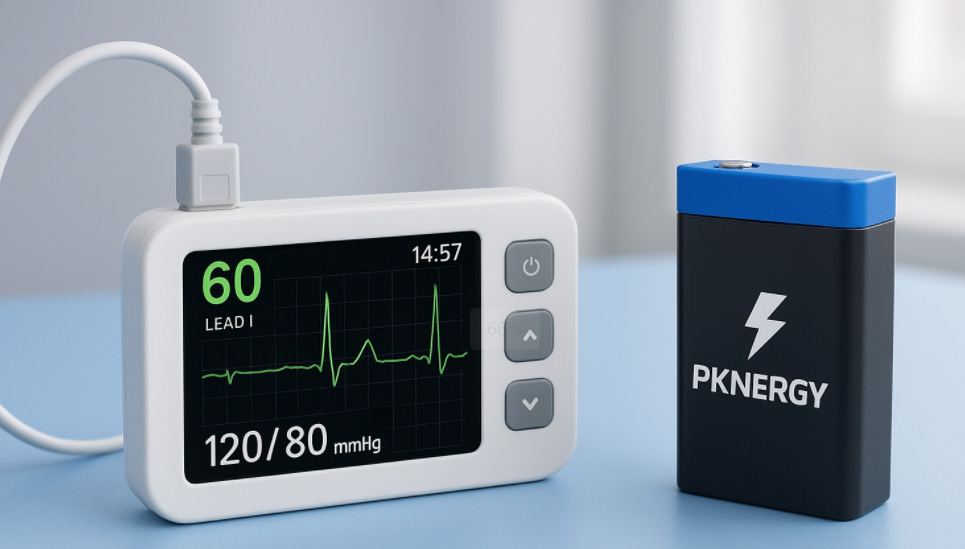
Market Trends and Development
The increasing demand for remote healthcare monitoring, telemedicine, and home healthcare solutions has significantly accelerated the adoption of lithium batteries in medical equipment.
Manufacturers are moving toward more advanced battery solutions, including:
- Custom battery packs optimized for device form factor
- Integrated BMS for enhanced safety and monitoring
- Environmentally friendly and recyclable battery designs
This trend reflects a broader shift toward personalized and portable healthcare systems.
Conclusion
Lithium batteries are indispensable in powering both portable and bedside ECG monitors. Their combination of high energy density, stable performance, and safety features makes them ideal for modern healthcare applications.
For engineering and procurement teams, selecting the right battery solution is a key factor in ensuring device reliability, patient safety, and long-term operational efficiency.
FAQ
Why are lithium batteries used in ECG monitors?
Because they provide high energy density, stable voltage, long cycle life, and reliable performance required for continuous medical monitoring.
What battery capacity is typical for portable ECG monitors?
Typically between 1000mAh and 5000mAh depending on device size and operating duration requirements.
Can ECG monitors operate during power outages?
Yes. Built-in lithium batteries provide backup power to ensure uninterrupted monitoring during outages.
Are lithium polymer batteries suitable for medical devices?
Yes. Lithium polymer batteries are widely used due to their flexibility, lightweight design, and customization capability.
What safety features are required for medical batteries?
Post time: Mar-23-2026