IoT Current Tracker Battery Pack (INR18650 3.7V) — Long-Life Custom Power Solution

IoT Current Tracker Battery Pack (INR18650 3.7V) — Long-Life Custom Power Solution (1)

Industrial IoT Battery • Current Monitoring

IoT Current Tracker Battery Pack (INR18650 3.7V) — Long-Life Custom Power Solution

Custom lithium-ion power for IoT current tracking devices—optimized for low-power sleep/wake cycles, stable voltage output, and long unattended operation in industrial and infrastructure environments.

3.7V
Nominal Voltage
INR18650
Cell Platform
Low-Power
Sleep/Wake Optimized
Replace image URLs in the <img> tags anytime to update visuals.

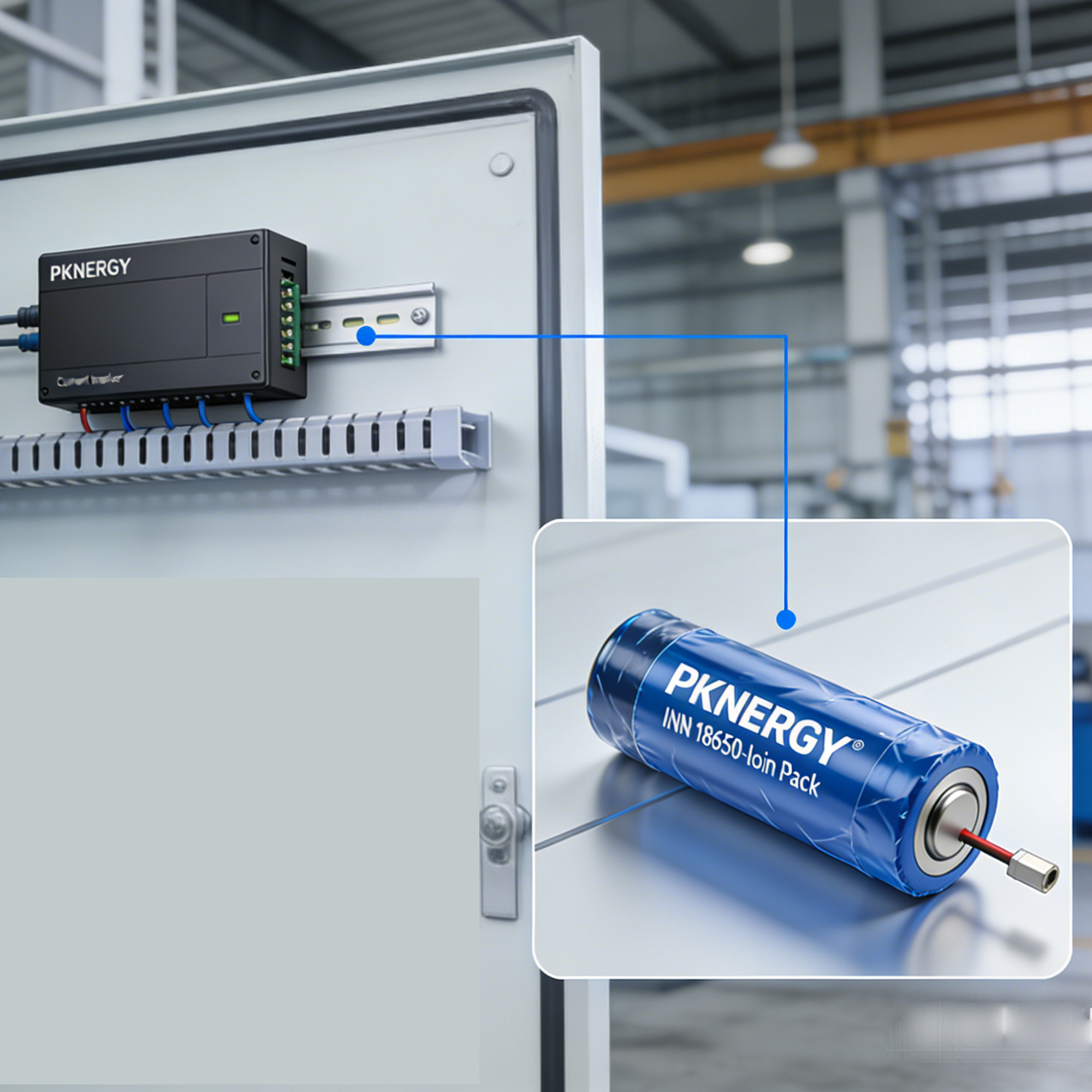
Suggested hero image: current tracker installed in a distribution box / smart building cabinet.

1) Project Snapshot

Device / Scenario
IoT current tracker for equipment/energy monitoring in cabinets, buildings, utilities, or factories.
Key Target
Long unattended runtime, stable sensing power, low maintenance.
PKNERGY Customization
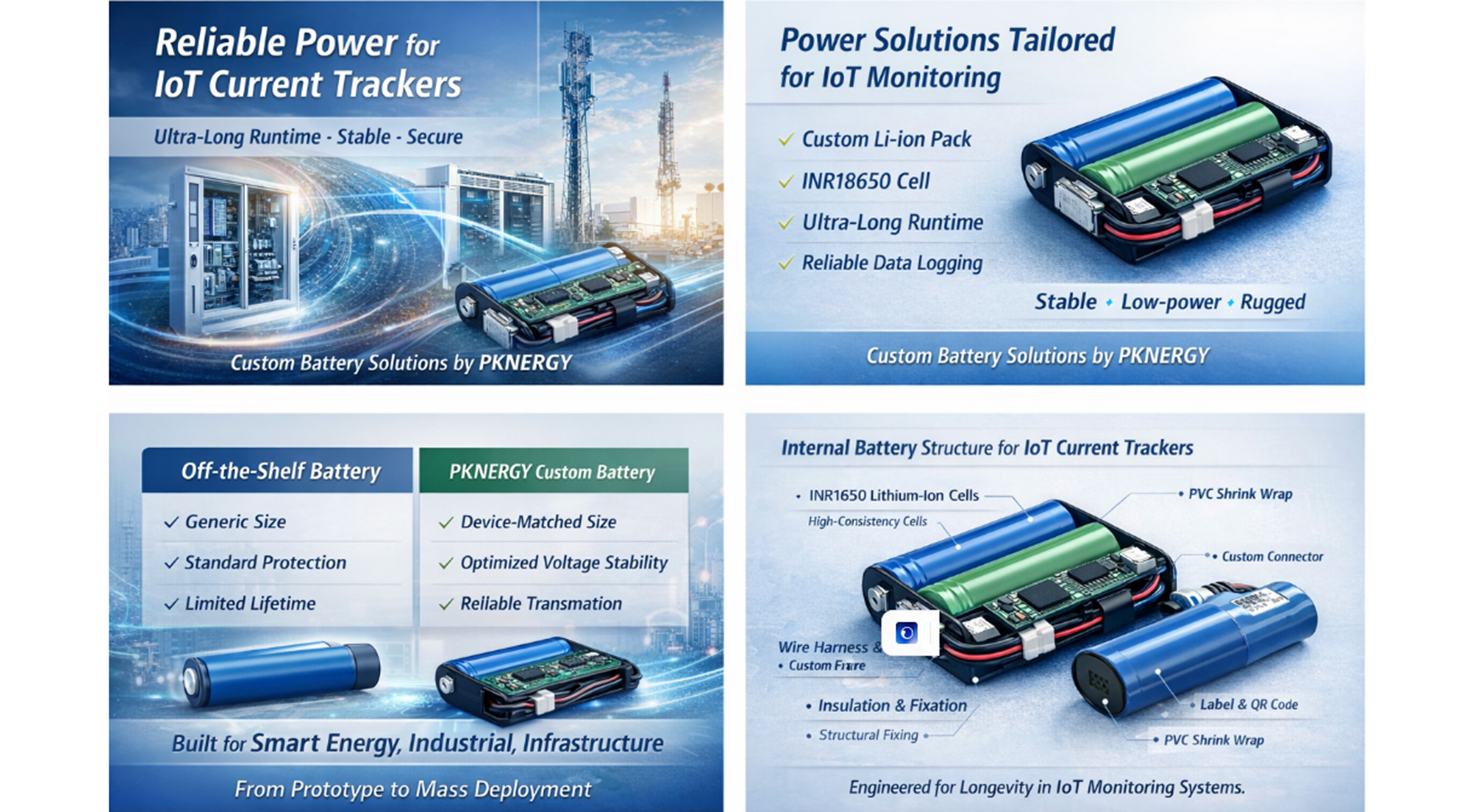
Pack structure + protection strategy + connector/harness matching for low-power IoT cycles.

2) Market & Use Case Trends

Typical deployments: smart buildings, industrial equipment monitoring, utility metering/IoT, and infrastructure supervision—often in large fleets that require maintenance-light power systems.

As deployments scale, battery replacement frequency and voltage stability become major cost drivers. A production-ready pack needs predictable quality, stable output during sensing/transmission bursts, and compatibility with sleep/wake behavior.

3) Core Battery Requirements for Current Trackers

Performance
  • Stable voltage to keep sensing consistent
  • Low self-discharge for long standby
  • Pulse support for radio transmission bursts (project-dependent)
Integration
  • Connector/harness reliability inside compact cabinets
  • Protection strategy for unattended operation
  • Consistency for scaling fleet deployments

4) How the Battery Is Integrated

  • Installed in: device enclosure / cabinet module
  • Role: primary power source (or backup power, depending on system design)
  • Key design point: tuned for low-power cycles (sleep/wake) and burst load behavior

5) Pain Points We Solve

Pain Point 1: Frequent maintenance across large deployments

Problem: Replacing batteries in large-scale monitoring networks increases labor cost and downtime risk.PKNERGY solution: Long-life INR18650 platform with low-power optimization and stable discharge behavior.

Result: Longer service intervals and lower maintenance workload.

Pain Point 2: Voltage drop causing unstable sensing or resets

Problem: Voltage sag during bursts can cause measurement noise, MCU resets, or data loss.PKNERGY solution: Cell selection + pack IR control + protection strategy tuned to device load profile.

Result: More stable sensing and better system reliability.

Pain Point 3: Installation friction (wiring/connector mismatch)

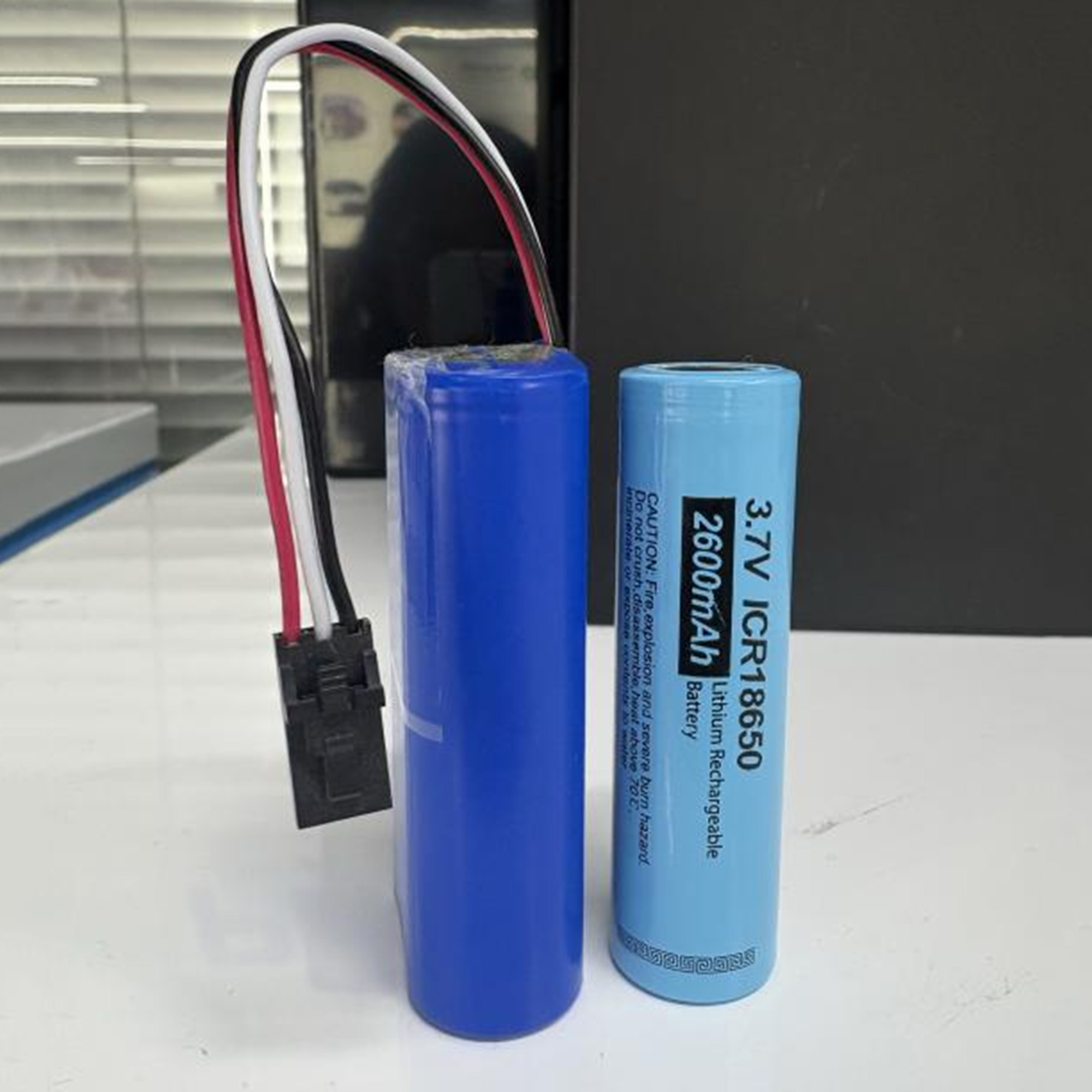
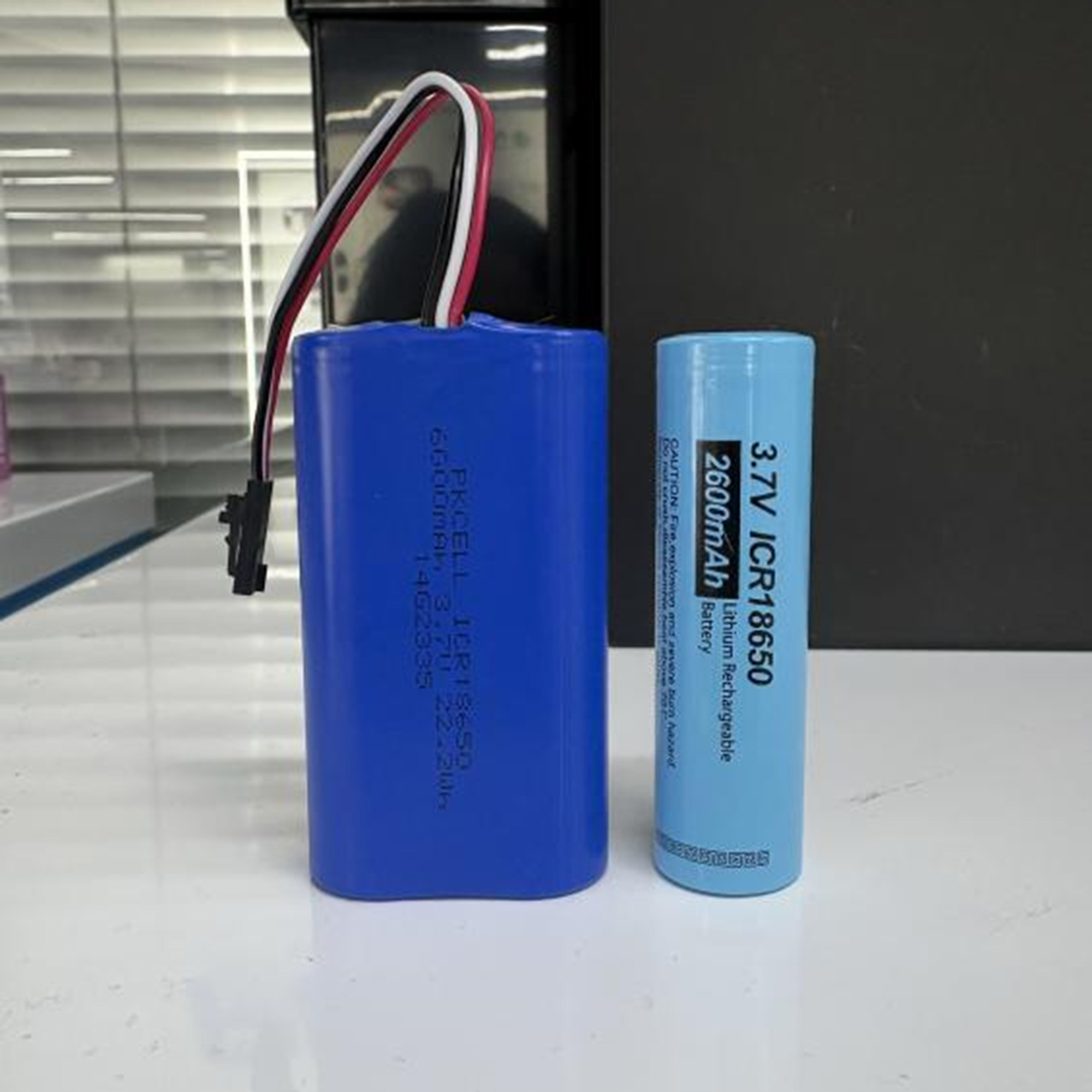
Problem: Generic packs often do not match connector standards or cabinet routing constraints.PKNERGY solution: Connector/harness customization and mechanical fit design for production integration.

Result: Faster assembly and fewer field failures caused by poor contacts.

6) Typical Battery Parameters

Item Spec (Typical) Notes
Cell Platform INR18650 Stable supply chain and proven reliability
Nominal Voltage 3.7V (single-cell platform) Series/parallel configurable per project
Capacity 2600–3500mAh (cell-level typical) Pack capacity depends on parallel design
Cycle Life Project-dependent Optimized for long standby and periodic bursts
Customization Connector / harness / structure / protection Align to device load profile and enclosure

7) Safety & Reliability

Protection Strategy
  • Overcharge / over-discharge protection
  • Overcurrent / short-circuit protection
  • Load-profile tuning for burst behavior (project-dependent)
Production Readiness
  • Consistent cell sourcing and QC workflow
  • Connector and harness verification for assembly
  • Stable output for sensing and communication modules

8) IoT Internal Link Matrix

Core conversion pages
IoT application pages (context)
Internal link tip: In future IoT articles (tracker / meter / smart sensor), keep 2–3 links to “Customized Battery” + “Lithium-ion Battery Pack” + 1 IoT application post to build a strong topic cluster.

9) FAQs

How long can an INR18650 pack power an IoT current tracker?
Runtime depends on the tracker’s sleep current, wake frequency, and transmission bursts. Share your duty cycle (sleep/wake timing and peak current), and we can recommend the right series/parallel design and capacity.
What causes resets or unstable readings in the field?
Common causes include voltage sag during bursts, high internal resistance, or connector contact issues. We optimize cell selection, pack IR control, and harness/connector matching to improve stability.
Can you customize connectors, cable length, and pack size?
Yes. PKNERGY supports connector types, harness length, insulation, and mechanical fit for enclosure/cabinet integration. Start with your assembly constraints and we’ll propose a production-ready design.
Is a single-cell 3.7V platform always enough?
Not always. Some trackers use regulators or higher rails. We can build series/parallel configurations based on your system voltage, peak current, and charging design (if rechargeable).
Do you support sampling and OEM/ODM engineering?
Yes. We support drawings, sampling, and mass-production alignment. Contact us with your load profile and enclosure constraints to start quickly.

10) Contact Cassie — PKNERGY

Need a long-life battery solution for IoT current tracking devices? Send your voltage target, duty cycle (sleep/wake), and peak current—we’ll recommend a stable, production-ready pack design.

Email: sale4@pknergy.com


Post time: Feb-04-2026

Customize samples immediately