
Customer Case: Lightweight 7.4V Li-Polymer Battery Pack for Stable UAV Power Delivery

Customer Case Study
Li-Polymer · Lightweight
Drone / UAV
Pack: LP701730 · 7.4V · 500mAh

Customer Case: Lightweight 7.4V Li-Polymer Battery Pack for Stable UAV Power Delivery

A small drone manufacturer needed a compact battery that would not compromise flight stability due to weight,
while still delivering reliable power during takeoff, maneuvering, and hovering. PKNERGY provided a lightweight
7.4V 500mAh Li-polymer pack designed for consistent performance and easy integration into a space-constrained airframe.

Nominal Voltage
7.4V
Capacity
500mAh
Max Continuous Discharge
1000mA
Size
15×17.5×33.0mm
Project highlight: The customer’s key requirement was balancing flight stability (weight-sensitive airframe) and
power consistency during takeoff and maneuvering. We focused on compact integration and stable discharge behavior.
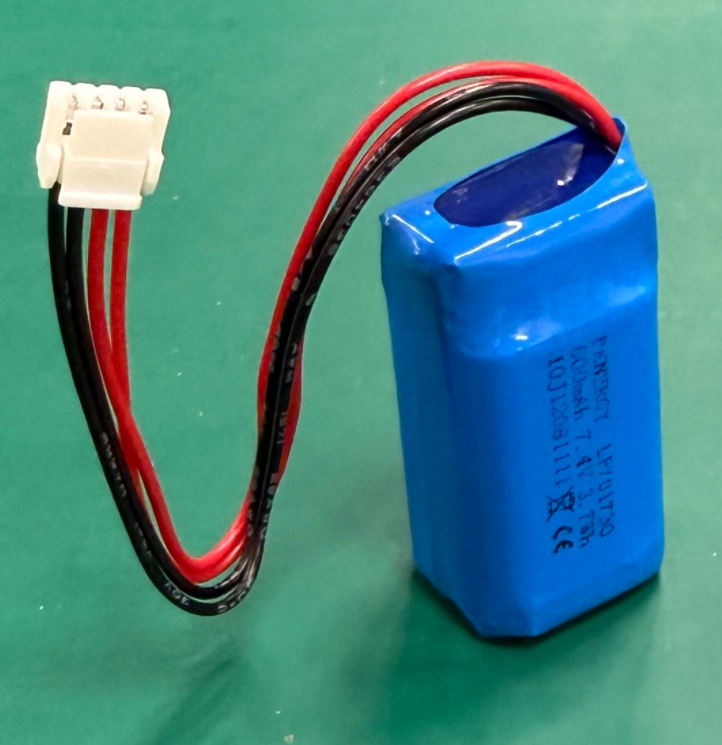
Application Photo
Battery Photo
At a glance
15g lightweight
Compact fit
Stable power
Production-ready

Customer Profile (Anonymous) & Project Context

The customer is a drone/UAV manufacturer focusing on compact, lightweight platforms. Due to confidentiality, we do not disclose the company name.
Their engineering team needed a battery solution that could be integrated into a fixed airframe space while maintaining stable power output
during dynamic flight phases.
Application
Small drone / UAV power system
Primary Constraint
Weight + limited internal space
Key Risk
Power instability during takeoff & maneuvering
Customer environment / device context (optional)

Challenges (What the customer needed to solve)

1) Weight vs. endurance trade-off
Drone platforms are highly weight-sensitive. Increasing capacity often impacts flight stability, maneuverability, and overall efficiency.
The customer needed a lightweight pack that still delivered usable runtime.
2) Stable output during dynamic flight
Takeoff and rapid maneuvering create fluctuating current demand. Power instability may lead to performance drops,
control anomalies, or unexpected resets in sensitive electronics.
3) Fixed installation envelope
The airframe enclosure and mounting position were fixed. The battery needed a compact format and a reliable connector/harness
to integrate without mechanical redesign.
Engineering note
In UAV systems, stability depends on both battery characteristics and the power train.
We recommend validating voltage behavior under peak demand, connector reliability, and consistent batch performance.

Solution (How PKNERGY supported the project)

PKNERGY proposed a compact 2S Li-polymer pack (LP701730) for the UAV power module. The design focused on lightweight integration,
stable discharge behavior, and production-ready consistency for future batch supply.

Compact & Lightweight
15×17.5×33.0mm and ~15g, helping maintain flight balance and responsiveness.
Stable Discharge
Controlled internal resistance (≤ 280mΩ) supports stable output under dynamic flight demand.
Safe Operating Window
Charging cut-off 8.4V and discharge cut-off 5.0V provide predictable pack behavior.
Integration Support
Connector/harness readiness and installation guidance reduced assembly errors and accelerated validation.

Technical Specifications

Parameter Value
Model LP701730
Nominal Voltage 7.4V
Nominal Capacity 500mAh
Size 15 × 17.5 × 33.0 mm
Internal Resistance ≤ 280mΩ
Charging Cut-off Voltage 8.4V
Discharge Cut-off Voltage 5.0V
Maximum Constant Charging Current 500mA
Maximum Continuous Discharging Current 1000mA
Cycle Life ≥ 300 cycles (80% DOD)
Weight 15g
Temperature Guidance (Project Reference)
Charge: 0–10°C (0.2C) · 10–35°C (1C) · 35–45°C (0.5C)
Discharge: -20–0°C (0.2C) · 0–10°C (0.5C) · 10–35°C (2C) · 35–60°C (0.5C)

Results & Customer Feedback

  • Improved flight stability: lightweight pack helped maintain balance and responsiveness.
  • Reliable power delivery: stable output supported takeoff, maneuvering, and hovering.
  • Faster integration: compact format and connector readiness reduced redesign effort.
  • Production confidence: consistent parameters and cycle life aligned with batch delivery needs.
“We needed a battery that would not compromise flight stability due to weight, while still providing reliable power during takeoff and maneuvering.
PKNERGY’s solution fit our space perfectly and delivered consistent performance during testing.”
— Product Engineer, Drone Manufacturer (Anonymous)
Testing / final integration (optional)
Testing / final integration

Photo Gallery (Optional)

Replace each image URL with your WordPress Media Library link. Duplicate or remove cards freely.

Caption: battery overview.
Caption: connector / harness detail.
Caption: UAV application scene.

FAQ — Common Questions

Q1: Why is battery weight so critical in UAV designs?
Weight directly impacts flight time, stability, and maneuverability. A heavier pack may increase load and reduce efficiency,
while a well-designed lightweight pack improves balance and overall performance.
Q2: What causes power instability during takeoff and maneuvering?
Dynamic flight phases create fluctuating current demand. If the pack’s internal resistance is too high or discharge capability is insufficient,
voltage can dip and affect sensitive electronics. Controlled IR and proper operating thresholds help improve stability.
Q3: What information should we provide for a proper UAV battery design?
Provide: voltage range, peak/continuous current, flight phases and duty cycle, size/weight limits, connector type, charging method,
and installation photos or drawings. If available, power train data or peak current measurement will speed up validation.
Q4: Can you customize connectors and harness length?
Yes. We can customize harness length, connector model, polarity, and labeling to match your assembly workflow and reduce integration errors.

Need a custom UAV battery?
Share your voltage, size/weight limits, peak current, connector preference, and installation photos.
Our engineers will propose a production-ready battery solution.

Post time: Dec-30-2025

Customize samples immediately