
Customer Case: 22.2V 5000mAh Battery Pack for Underwater DPV (Sea Scooter) — Stable 30A Output in Harsh Conditions

Customer Case Study
Li-ion · 6S (22.2V)
Underwater DPV / Sea Scooter
Pack: INR21700 · 22.2V · 5000mAh

22.2V 5000mAh Battery Pack for Underwater DPV (Sea Scooter) — Stable 30A Output in Harsh Conditions

Our customer develops an underwater propulsion device (DPV / sea scooter) used in diving scenarios.
They needed a compact, high-energy pack that can deliver stable thrust current while maintaining predictable cut-off behavior.
PKNERGY engineered a 6S (22.2V) INR21700 solution with controlled internal resistance, production-ready harnessing,
and current capability designed around real DPV load profiles.

Nominal Voltage
22.2V
Capacity
5000mAh
Max Continuous Discharge
30A
Core Benefit
Stable Thrust
What we solved: The customer needed consistent high-current discharge without unstable behavior under load.
We optimized the pack for low IR (≤120mΩ), defined voltage window (25.2V charge cut-off / 15.0V discharge cut-off),
and a robust harness to support repeat production.
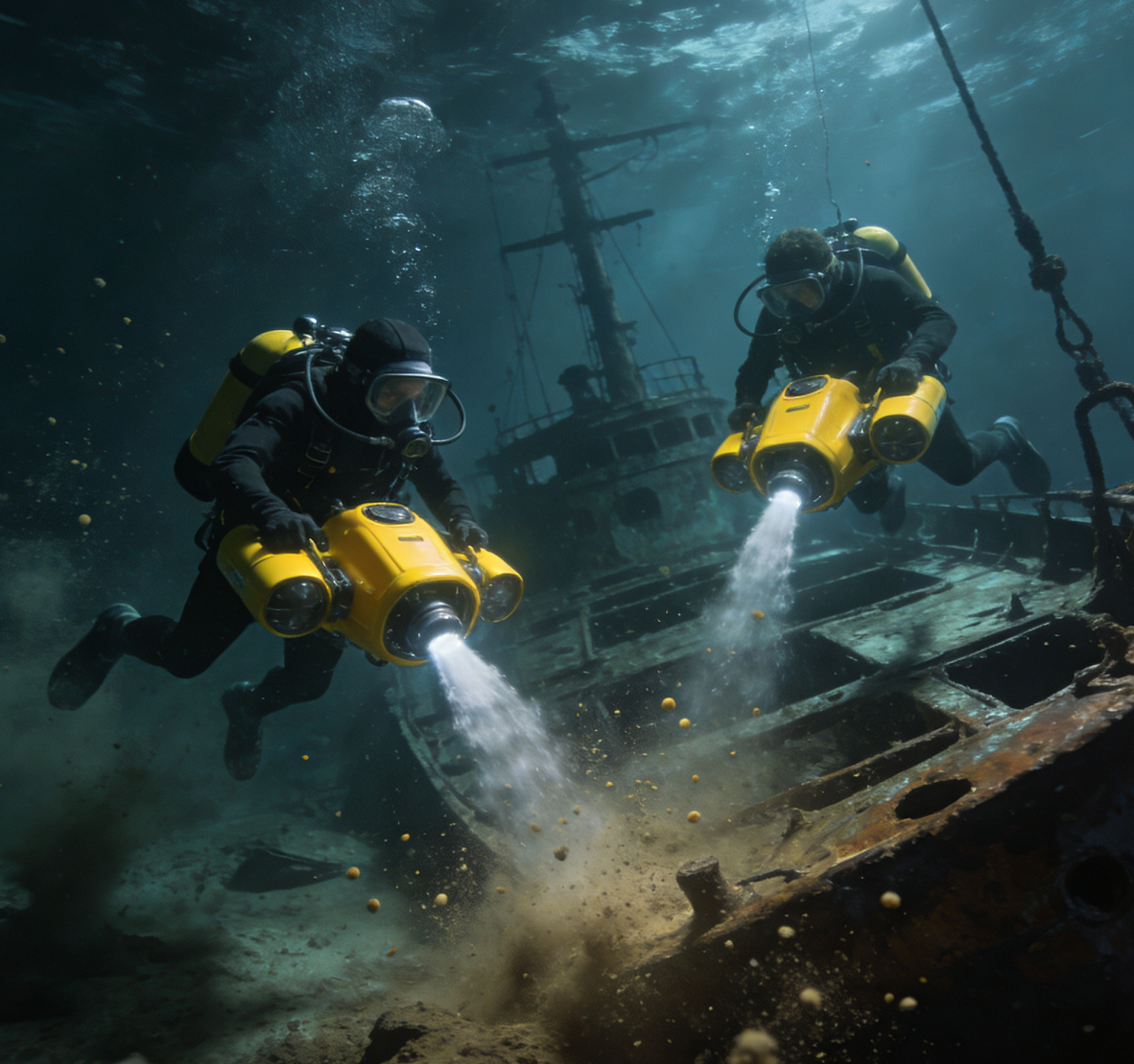
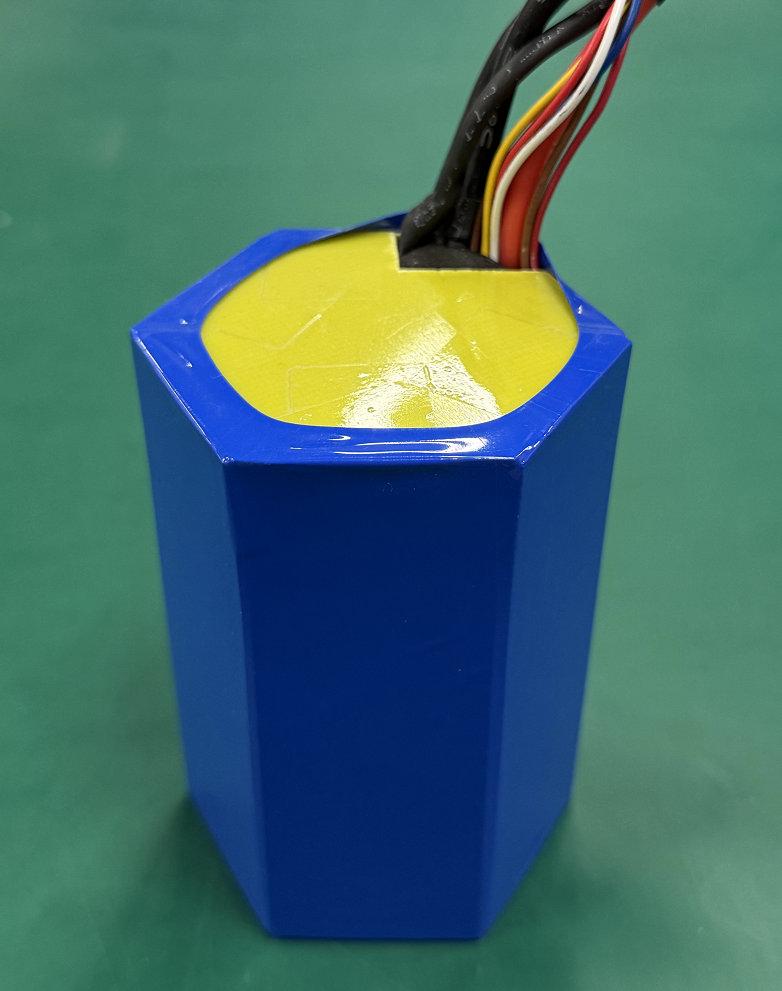
Application Photo
Battery Photo
At a glance
6S 22.2V platform
30A continuous
Low IR ≤120mΩ
OEM harness-ready

Customer Profile (Anonymous) & Journey

The customer is a diving equipment developer focused on compact underwater propulsion. Their DPV product
runs in demanding real-world conditions — frequent starts, continuous load, and strict reliability expectations.
The team approached PKNERGY after evaluating common off-the-shelf packs that could not consistently meet their
current and cut-off behavior requirements.
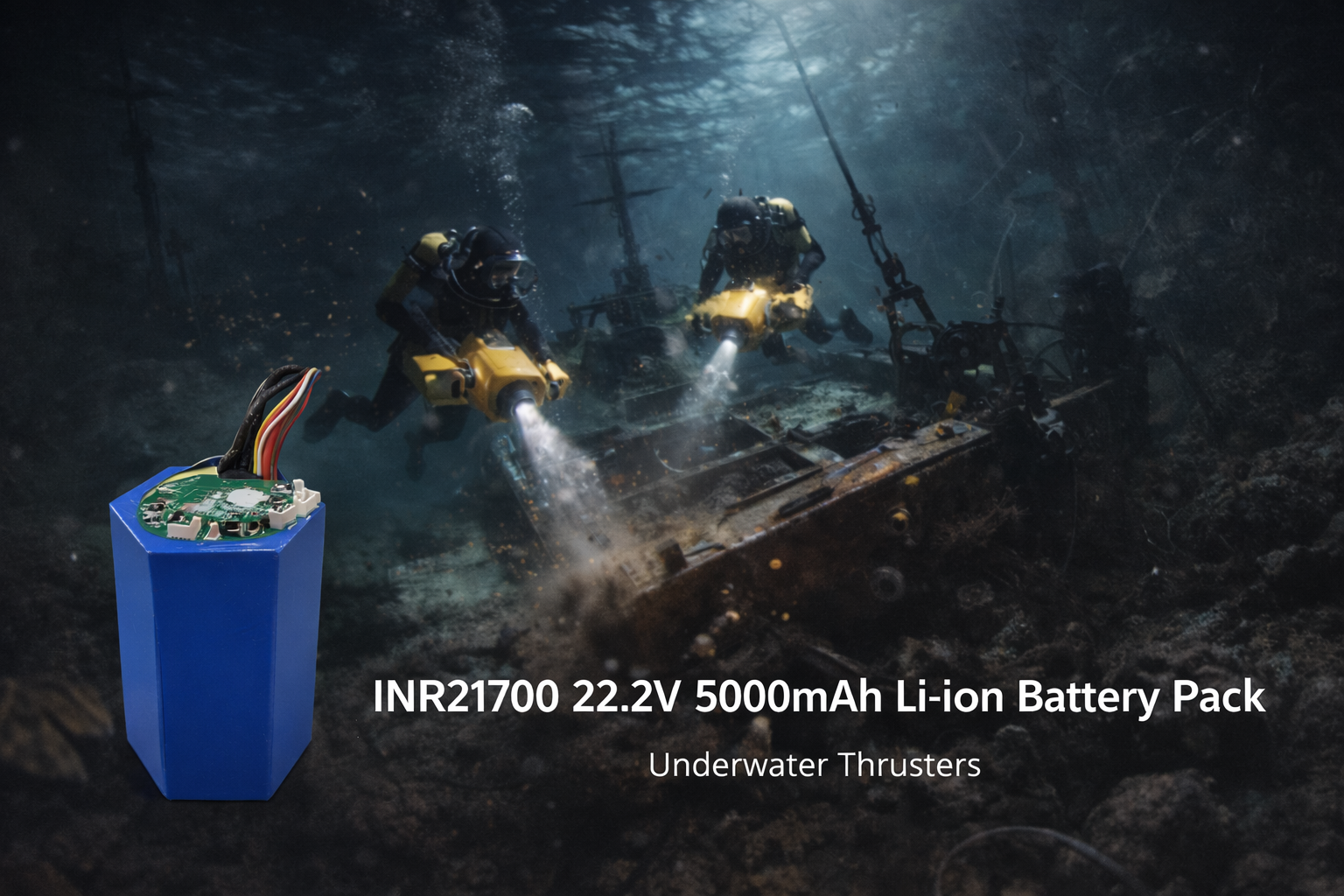
Application
Underwater DPV / sea scooter
Key Requirement
Stable high-current discharge
Priority
Predictable cut-off + production consistency
Customer environment

Challenges (What the customer needed to solve)

1) High-current load stability
DPV motors draw high current during starts and continuous operation. The pack must keep voltage stable to maintain thrust and control response.
2) Predictable voltage window
Unstable cut-off behavior can cause early shutdowns or performance drops. The customer required defined thresholds for charging and discharging.
3) Production-ready consistency
Underwater products demand consistent assembly quality. The customer needed a pack design that could be repeated reliably for batch supply.
Engineering note
For high-current DPV loads, pack impedance is a key driver of voltage sag. We focused on IR control,
stable wiring and protection design, and consistent production assembly to reduce risk in field use.

Solution (How PKNERGY engineered the pack)

PKNERGY delivered a compact 22.2V pack based on INR21700 cells, tailored for underwater propulsion devices.
The solution emphasizes stable current delivery, consistent thresholds, and reliable production assembly for repeat orders.

Stable Output Under Load
Designed for 30A continuous discharge to support thrust stability and predictable runtime.
Defined Voltage Window
Charge cut-off 25.2V and discharge cut-off 15.0V help ensure consistent protection behavior.
Low Impedance Design
Internal resistance ≤ 120mΩ reduces voltage sag during motor load changes.
OEM Harness & Assembly
Robust wiring harness and stable structure support batch supply and easier integration into the DPV housing.

Technical Specifications

Parameter Value
Model INR21700
Nominal Voltage 22.2V
Nominal Capacity 5000mAh
Size 70 × 75 × 105 mm
Internal Resistance ≤ 120mΩ
Charging Cut-off Voltage 25.2V
Discharge Cut-off Voltage 15.0V
Maximum Constant Charging Current 5A
Maximum Continuous Discharging Current 30A
Cycle Life ≥ 300 cycles (80% DOD)
Weight 540g
Temperature Guidance (Project Reference)
Charge: 0–10°C (0.2C) · 10–35°C (1C) · 35–45°C (0.2C)
Discharge: -20–0°C (0.2C) · 0–10°C (0.5C) · 10–35°C (30A) · 35–60°C (0.5C)

Results & Customer Feedback

  • Stable thrust output: the pack maintains strong current delivery with reduced voltage drop under DPV motor load.
  • Predictable protection behavior: defined cut-off window reduces unexpected shutdown risk during long underwater runs.
  • Integration-ready build: a robust harness and compact structure simplify assembly into sealed DPV housings.
  • Repeatable supply: consistent specs support pilot builds and batch manufacturing.
“Our DPV requires steady current underwater — sudden voltage drops can reduce thrust and impact the whole experience.
PKNERGY helped us refine the pack design and delivered consistent performance with a reliable cut-off window. The wiring and build quality
made integration into our sealed housing much smoother.”
— Product Engineer, Underwater Propulsion Device Team (Anonymous)

Photo Gallery (Optional)

Add more photos (pack angles, PCB close-up, harness details, sealing solution, underwater test shots, etc.).
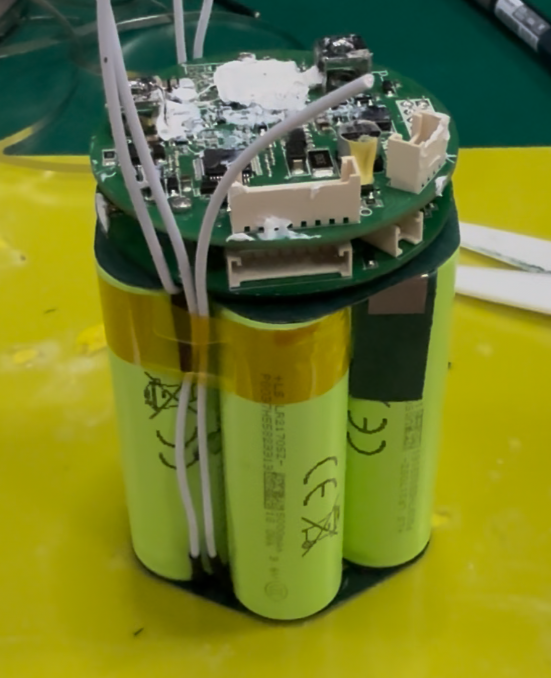
Caption: pack overview / side view.
Caption: PCB / protection detail.
Caption: underwater usage scenario.

FAQ — Common Questions

Q1: Why does a DPV battery need strong continuous discharge capability?
Underwater propulsion motors draw high current continuously. A pack designed for stable current reduces thrust drop and improves reliability,
especially during starts and speed changes.
Q2: What information do you need to customize an underwater propulsion battery?
We typically confirm voltage platform (e.g., 6S 22.2V), peak/continuous current, target runtime, available space,
connector type, and sealing constraints. Photos of the device battery bay help speed up fit verification.
Q3: Can PKNERGY support harness, connector, and packaging customization?
Yes. We can customize harness length, connector models, wrapping/labeling, and recommend structure improvements for safer integration.
Q4: How do you reduce voltage sag under high load?
We optimize cell selection, pack layout, busbar and wiring design, and internal resistance control. For DPV loads,
impedance control is essential for stable thrust performance.

Need a custom battery for your underwater equipment?
Share your voltage, continuous/peak current, runtime, size limits, and connector preference.
Our engineers will propose a production-ready solution.

Post time: Jan-05-2026

Customize samples immediately