
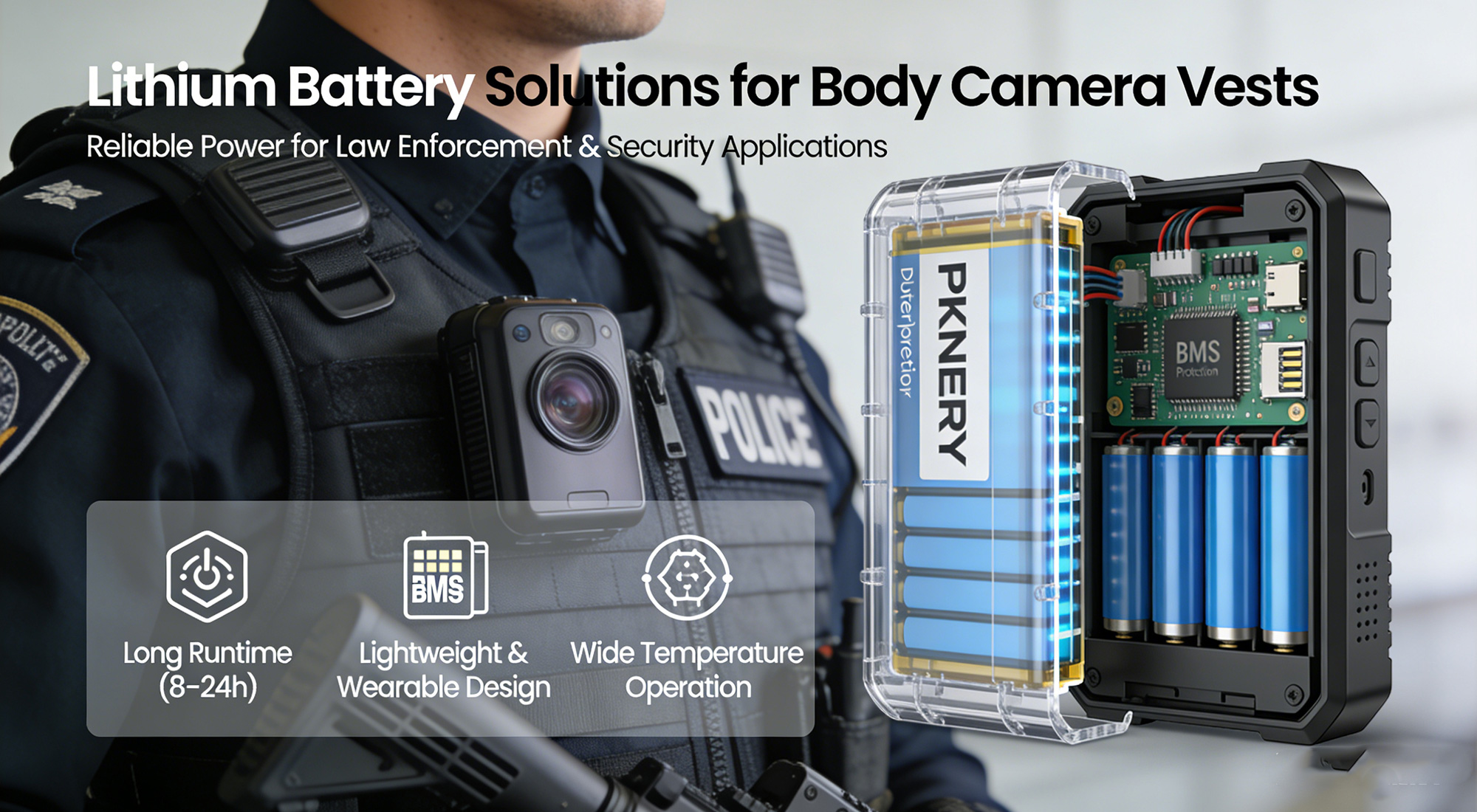
A Comprehensive Guide to Choosing Batteries for Body Camera Vests
As law enforcement, security patrol, city management, and emergency response operations become increasingly complex,
body-worn cameras (BWCs) have become essential tools.
To ensure continuous operation, body camera vests require reliable and long-lasting power systems.
Selecting the right custom lithium battery
— including battery chemistry, capacity, and protection design — directly impacts runtime, comfort, and operational reliability.
1. Core Power Requirements for Body Camera Vests
- Extended Runtime: Typical duty cycles last 8–12 hours, with some missions exceeding 24 hours.
- Lightweight & Comfort: Heavy battery packs reduce mobility and increase fatigue.
- High Safety Standards: Batteries must comply with UN38.3, CE, and RoHS, and integrate PCM/BMS protection.
- Environmental Resilience: Reliable operation from –20℃ to +50℃, often with IP65–IP68 protection.
- Long Cycle Life: Daily use requires 500–2000+ cycles depending on application type.
2. Common Battery Types for Body Camera Vests
Lithium-Ion Batteries (18650 / 21700)
Lithium-ion batteries offer high energy density (250–300 Wh/kg) and compact size.
They are widely used in mainstream body camera vests for 8–12 hour operation.
Learn more about lithium-ion battery solutions.
Lithium Iron Phosphate (LiFePO4) Batteries
LiFePO4 batteries provide excellent safety and long lifespan (2000–5000 cycles).
Although slightly heavier, they are highly stable in hot environments and continuous-duty scenarios.
Explore LiFePO4 battery packs for high-safety applications.
Lithium Polymer (LiPo) Batteries
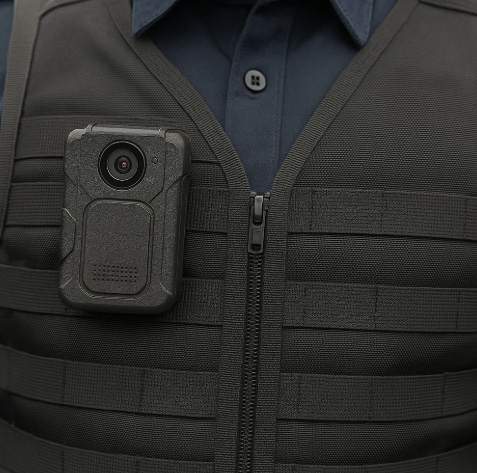
Lithium polymer batteries feature flexible shapes, lightweight design, and thin profiles.
They are commonly used in tactical or covert body camera vests where comfort is critical.
See lithium polymer battery options.
Disposable Batteries (NiMH / Alkaline)
Disposable batteries are easy to source but offer limited runtime.
They are generally suitable only for short-term emergency backup use.
3. Key Considerations When Choosing a Battery
- Mission Duration: 8–10h = 6000–10,000mAh; 12–24h = ≥15,000mAh or swappable designs.
- Operating Environment: Cold or hot conditions favor LiFePO4 or low-temperature Li-ion solutions.
- Comfort & Weight: 21700-based Li-ion balances capacity and weight; LiPo suits ultra-light vests.
- Budget vs. Lifespan: Li-ion offers lower upfront cost; LiFePO4 delivers longer lifecycle value.
4. Future Trends in Body Camera Vest Batteries
- Fast charging and swappable battery modules for continuous operation
- Smart BMS systems with real-time monitoring of battery health and temperature
- Emerging chemistries such as sodium-ion and solid-state batteries
5. PKNERGY Battery Solutions for Law Enforcement & Security
As a professional lithium battery manufacturer,
PKNERGY provides customized battery solutions for body camera vests and wearable enforcement equipment.
- Li-ion, LiFePO4, and LiPo battery packs with advanced BMS protection
- Custom-shaped, slim, and lightweight designs
- Wide operating temperature range (–20℃ to +60℃)
- Certified to UN38.3, CE, MSDS
- Flexible connectors including XT30, T-type, and waterproof interfaces
Conclusion
Choosing the right battery for body camera vests is critical to ensuring uninterrupted recording,
officer safety, and mission success.
With proper chemistry selection and professional customization,
battery performance can be optimized for real-world enforcement environments.
If you are developing or sourcing batteries for body-worn camera systems,
feel free to contact PKNERGY for technical consultation.
Post time: Jan-10-2026