
Customer Case: 22.2V High-Rate Li-Polymer Battery for Compact Mini Pump

Customer Case Study
Li-Polymer · High-Rate
Mini Pump
Pack: LP601545 · 22.2V · 350mAh · 10C

Customer Case: 22.2V High-Rate Li-Polymer Battery for Compact Mini Pump

A mini pump manufacturer needed a battery that could fit a tight enclosure and still handle motor startup surge current.
Previous solutions caused voltage sag and occasional shutdown. PKNERGY delivered a compact, high-rate Li-polymer pack designed
for stable startup behavior and consistent batch performance—ready for production integration.
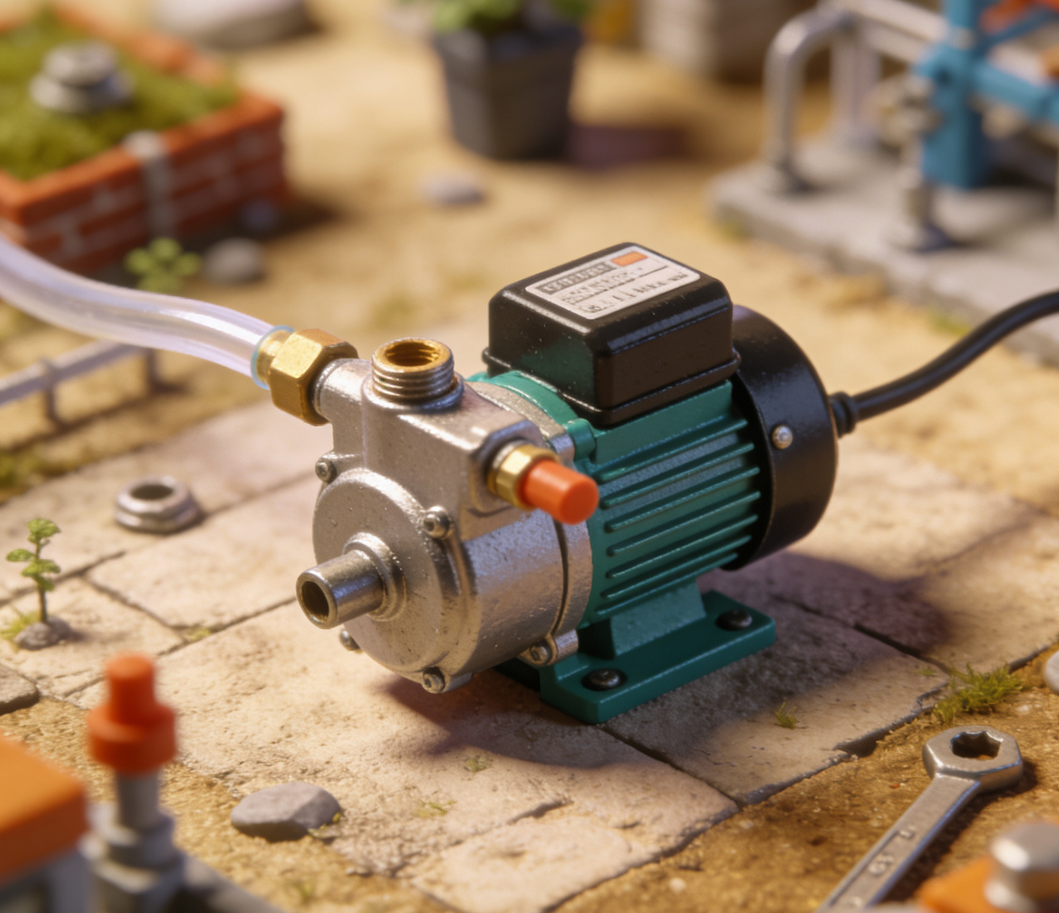
Nominal Voltage
22.2V
Capacity
350mAh
Discharge
10C (3.5A)
Size
28.5×26.5×52.5mm

Application Photo
Battery Photo
Project highlight: The key was not only “fit-in-space”, but stable behavior during startup surge. We designed the pack
around rate capability + IR control + consistent thresholds for production use.

Introducing the Customer (Anonymous) & Their Journey

Our end-user is a mini pump equipment manufacturer serving compact fluid-transfer applications. Due to confidentiality,
we do not disclose the company name. However, we can share the engineering journey:
after multiple rounds of trial packs and supplier samples, the team still faced inconsistent startup behavior and production risk—
prompting them to seek a compact, high-rate, stable-voltage solution.
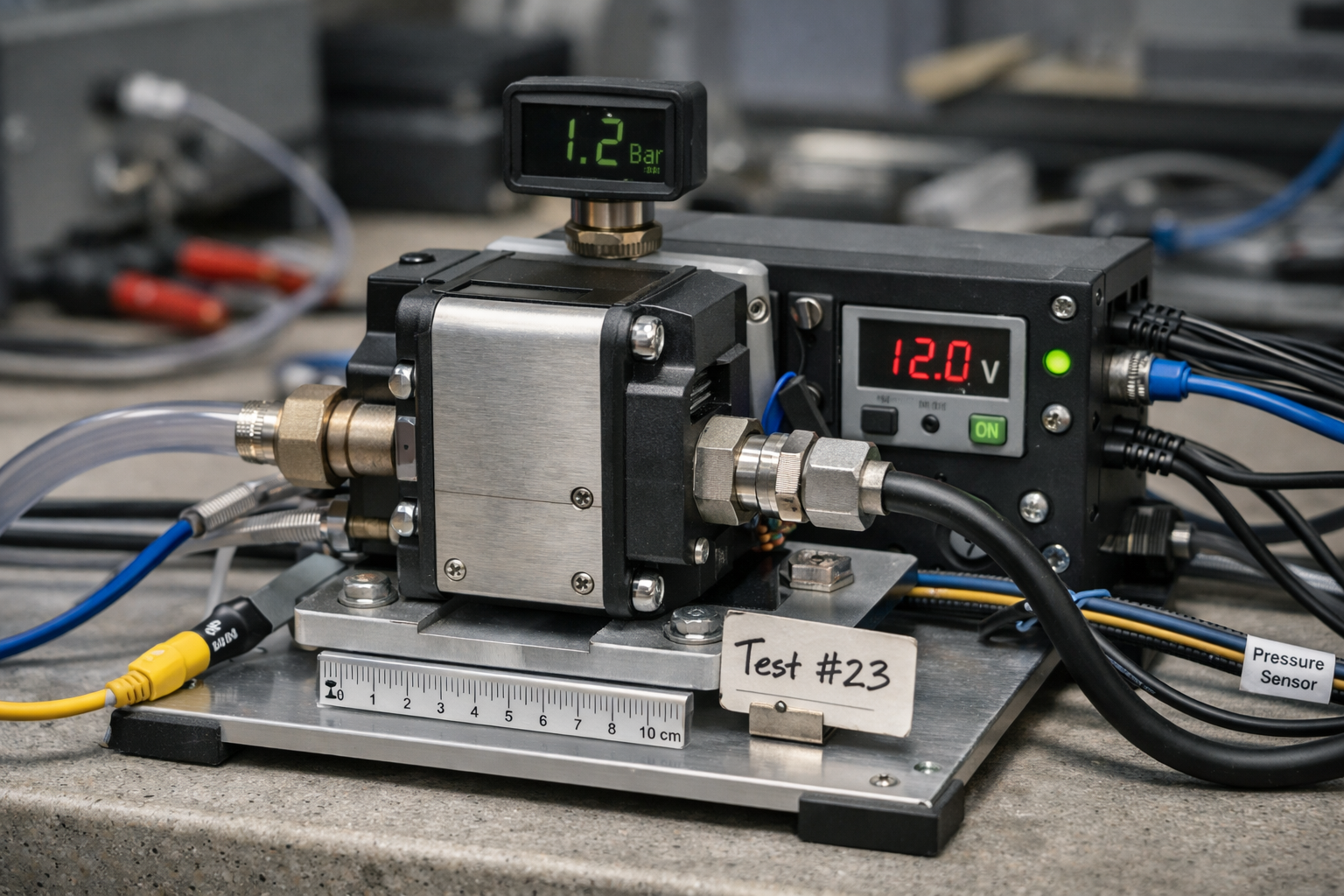
Application
Mini pump system (space-constrained enclosure)
Project Stage
Prototype → validation → production integration
Customer device / working environment (optional)

Challenges (What was going wrong)

1) Startup surge & voltage sag
Pump motors draw a short burst at startup. If the pack’s discharge capability or internal resistance is not optimized,
terminal voltage can dip below the controller’s undervoltage threshold, causing shutdown.
2) Tight space & installation risk
The enclosure limited pack dimensions and cable routing. The customer needed a solution that fits without forcing a redesign.
3) Batch consistency for production
Prototype success isn’t enough—batch consistency depends on IR control, threshold stability, and practical QC checkpoints.
Engineering note
For compact motorized devices, rated capacity alone doesn’t predict startup behavior.
The critical factors are rate capability, internal resistance distribution, and controller threshold

Solution (How PKNERGY engineered it)

PKNERGY proposed a dedicated high-rate Li-polymer pack (LP601545) aligned to the customer’s electrical profile and mechanical envelope.
Our goal was stable startup behavior and production consistency—not just meeting a paper spec.

High-Rate Design
10C continuous discharge supports motor startup and reduces undervoltage trips.
IR Control
Controlled internal resistance (≤ 240mΩ) to reduce voltage sag and support consistent batches.
Operating Window
Stable thresholds: charge 25.2V / discharge 15.0V, predictable under real usage.
Deliverables
  • Spec confirmation
  • Sample iteration support
  • QC criteria proposal
  • Integration note

Key Specifications (LP601545)

Parameter Value
Model LP601545
Nominal Voltage 22.2V
Nominal Capacity 350mAh
Size 28.5 × 26.5 × 52.5 mm
Internal Resistance ≤ 240mΩ
Charge Cut-off Voltage 25.2V
Discharge Cut-off Voltage 15.0V
Max Continuous Discharge 3500mA (10C)
Cycle Life ≥ 300 cycles (80% DOD)

Results (What improved)

  • More reliable startup behavior: stable performance during motor start and load changes.
  • Reduced integration complexity: compact form factor helped avoid housing redesign.
  • Production-ready consistency: QC checkpoints improved confidence for repeatable delivery.
  • Project progress: moved from prototype evaluation into production integration.
“We were not just looking for a battery that fits. The real challenge was startup reliability.
PKNERGY understood our surge load profile and delivered a pack that stabilized the behavior and reduced trial-and-error.”
— Engineering Lead, Mini Pump Manufacturer (Anonymous)
Final integration / testing photo (optional)

More Photos (Optional)

Add as many images as needed. Duplicate the cards below and replace the URLs.

Caption: battery close-up.
Caption: harness/connector detail.
Caption: device application.

FAQ — Common Questions

Q1: Why does the pump fail to start with “normal” batteries?
Motor startup creates a short surge current. If internal resistance is high or discharge capability is low, voltage dips can trigger
undervoltage protection. A high-rate pack with controlled IR helps prevent this.
Q2: What information do you need to design a proper pack?
Voltage range, peak/continuous current (startup current is critical), size limit, connector type, charging method, temperature range,
and installation photos/drawings. Motor specs or startup waveform data will speed up validation.
Q3: Can you customize connectors, cables, and pack format?
Yes. We can customize harness length, connector model, polarity, labeling, and wrapping to match assembly workflow and reduce line errors.
Q4: How do you ensure batch consistency for production?
We align QC criteria with application risk points—commonly including IR window control, voltage/capacity verification, and threshold stability checks.
For motorized devices, IR control is critical to reducing startup voltage sag across batches.

Need a custom battery for your device?
Send your voltage, size limit, startup/discharge current, connector preference, and application photos.
Our engineers will propose an optimized, production-ready solution.

Post time: Dec-30-2025

Customize samples immediately